
Inner Dialogue
Body awareness is a constant dialogue between proprioception, which informs us about the body’s position in space, and interoception, which connects us to internal sensations. This dynamic dialogue allows us to perceive the body as an integrated and constantly changing system. By cultivating this awareness, we can improve our ability to adapt to different situations and respond more effectively to external stimuli.
Internal Sensations
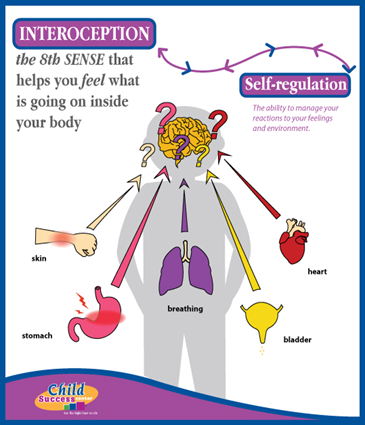
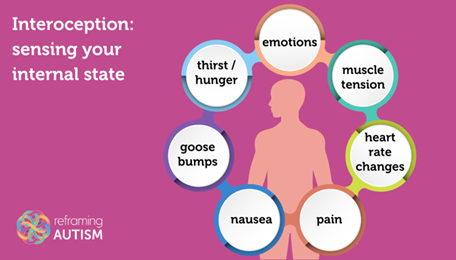
Interoception is the ability to perceive and interpret the body’s internal sensations. This form of body awareness includes the perception of visceral signals, such as hunger, thirst, pain, and emotions. Unlike proprioception, which focuses on the body’s position in space, interoception deals with how we feel inside our bodies.
Emotion Regulation
Interoception plays a crucial role in emotion regulation and stress management. Good interoceptive awareness allows individuals to recognize and respond appropriately to internal signals, thereby improving mental and physical health. It has been linked to greater emotional resilience, reduced anxiety, and the ability to cope with stressful situations more effectively.
Therapeutic Setting
In a therapeutic setting, interoception is fundamental for the treatment of psychosomatic disorders and for improving the overall well-being of patients. Massage therapy, by integrating techniques that stimulate interoceptive awareness, can facilitate this process, allowing patients to explore and better understand their bodily sensations.
Physiological Mechanisms
Interoception is influenced by several physiological mechanisms, including the sensitivity of visceral receptors and vagal tone. The vagus nerve, in particular, plays a crucial role in the connection between body and mind, facilitating communication between the autonomic nervous system and emotions. Good vagal tone is associated with a greater capacity for emotional self-regulation and better stress management.
Receptor Network
Interoception is mediated by a complex network of receptors located throughout the body, including internal organs and tissues. These receptors send signals to the central nervous system, where the information is processed and integrated. The brain areas involved in processing interoceptive information include the insular, somatosensory, and cingulate cortexes.
Brain Areas
- Insular Cortex: This region plays a key role in interoceptive awareness, integrating visceral and somatic information and contributing to emotional awareness.
- Cingulate Cortex: It is involved in emotion regulation and decision-making in response to bodily signals.
Cortical Interaction
The interaction between the somatosensory cortex and the other brain areas involved in interoception is fundamental to our ability to perceive and interpret internal sensations. For example, when we experience abdominal pain, the somatosensory cortex processes the pain information coming from the viscera, while the insula and the cingulate contribute to the emotional component of the experience.
Research on the Multidisciplinary Revolution
Interoception and Chronic Pain
The research conducted by Voss and colleagues on interoception and chronic pain offers an in-depth picture of the role of body awareness in mind-body practices. Authors conducted a systematic review of the literature, analyzing a large body of research that investigates the relationship between interoception and various practices, such as yoga and mindfulness. The results highlight how these practices are able to modulate brain activity in the regions involved in pain perception and emotional regulation. In particular, the ability to perceive and interpret the body’s internal signals seems to be a fundamental element in reducing the intensity and emotional impact of pain.
The study emphasizes the importance of a multidimensional approach to understanding pain, which takes into account not only physiological aspects, but also psychological and social factors.
The results showed how mindfulness practices are able to reduce anxiety, depression and stress, while increasing the sense of well-being and life satisfaction. Furthermore, the training of attention and body awareness promoted by these practices can foster the development of more effective coping strategies, allowing patients to manage more adaptively the challenges related to living with chronic pain.
Voss, S., Boachie, D. A., Nieves, N., & Gothe, N. P. (2023). Mind-body practices, interoception and pain:
a scoping review of behavioral and neural correlates. Annals of Medicine, 55(2).
https://doi.org/10.1080/07853890.2023.2275661 Full article: Mind-body practices, interoception and pain: a
scoping review of behavioral and neural correlates (tandfonline.com)