
Pain’s Relativity
Pain, a universal experience, is complex and multifactorial, extending beyond physical sensation. Its perception is influenced by interconnected factors, making it subjective. Mood is crucial: negative emotions amplify pain, while a positive mood can reduce it. Cognitive factors, like expectations and beliefs, also influence intensity and duration. The social and cultural context shapes how pain is expressed and perceived.
Pain Perception
Our attention impacts pain: concentrating on it amplifies intensity, while distraction lessens it. Sleep and rest are fundamental; lack of sleep increases pain sensitivity. Consequently, pain perception is individual; two people with the same injury may experience different pain levels.
Self-Healing
Understanding discomfort’s subjective nature opens avenues for self-healing. Integrating multidisciplinary approaches, like relaxation, mindfulness, stress management, and lifestyle changes, can reduce psychophysical factors’ impact. Relaxation techniques, such as diaphragmatic breathing and meditation, reduce stress and anxiety, decreasing discomfort perception. Cognitive-behavioral therapy can change negative beliefs about discomfort, developing coping strategies and enhancing control through self-hypnosis and biofeedback.
Proprioception’s Role
Proprioception, perceiving body position and movement, is fundamental in discomfort perception. Acute proprioceptive awareness positively influences discomfort management. It improves body awareness, allowing precise perception of sensations, including discomfort, helping identify the source. Proprioception identifies and relaxes tense muscles, as tension amplifies discomfort. Correct posture, maintained by proprioception, reduces stress on joints and muscles, reducing discomfort.
Rehabilitation & Integration
Proprioception facilitates rehabilitation after injuries, as awareness of body position and movement allows effective exercises. For example, a runner with knee pain can use proprioception to identify weak hamstrings and strengthen them to reduce pain and improve knee stability. Integrating practices like active listening and breathing supports self-healing, reconsidering pain and managing negative emotions. Paying attention to sensations, without judgment, improves understanding of our body. Proprioception, with body awareness, helps identify pain’s source and understand its mechanisms. Diaphragmatic breathing promotes muscle and mental relaxation, reducing tension and anxiety.
Chronic Discomfort & Emotional Management
Proprioception is important in chronic discomfort. Regular proprioceptive exercises reduce discomfort intensity and improve quality of life, modulating discomfort perception, relaxing muscles, and improving function. Recognizing and accepting negative emotions is the first step to managing them. Techniques like diaphragmatic breathing and mindfulness calm the mind. Proprioception allows recognizing the connection between negative emotions and physical sensations, allowing detachment and rational handling. For example, someone with chronic back discomfort can use active listening to identify negative emotions, like frustration. Through diaphragmatic breathing and body scanning, they can calm the mind, while proprioception allows identifying tense muscles and using relaxation.
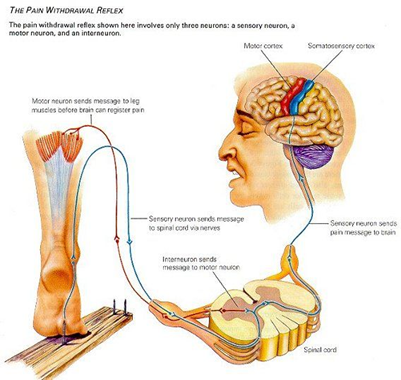
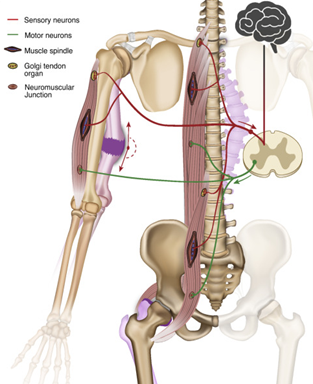
Chronic Pain & Awareness
CBT for Elderly with Chronic Low Back Pain
The study by Reid (2003) on cognitive-behavioral therapy (CBT) analyzes chronic low back pain in the elderly. This preliminary work has shown that CBT, applied to a group of elderly people with chronic low back pain, is not only feasible, but can also lead to significant reductions in pain intensity and pain-related disability.
The importance of body awareness is manifested here as a key element: through relaxation and cognitive restructuring techniques, participants were able to recognize and modify dysfunctional thoughts associated with pain, thereby improving their ability to cope with it. Moreover, the fact that 93% of the participants completed the program suggests that older adults can be motivated to engage in non-pharmacological treatments, if properly structured. Therefore, in this context, massage therapy can be seen not only as a physical intervention, but as an opportunity to develop greater body awareness, facilitating a multidisciplinary approach to pain treatment and quality of life improvement.
M. Carrington Reid, John Otis, Lisa C. Barry, Robert D. Kerns, Cognitive–Behavioral Therapy for Chronic
Low Back Pain in Older Persons: A Preliminary Study, Pain Medicine, Volume 4, Issue 3, September 2003,
Pages 223–230,https://academic.oup.com/painmedicine/article/4/3/223/1862022?searchresult=11
Mind-Body Practices and Pain Perception
In the context of body awareness, the research by Rogers and colleagues offers an important overview of how mind-body practices can influence pain perception through interoception. Chronic pain represents a complex and debilitating condition that affects a significant portion of the population, prompting many to seek alternative approaches for relief.
The review conducted examined a total of 690 articles, highlighting 24 relevant studies. Of these, 16 focused on interoceptive outcomes in response to mind-body practices for chronic pain, while eight studies analyzed the response to evoked pain tasks in experienced practitioners. The results suggest that interoceptive practices such as mindful attention and acceptance of bodily sensations may serve as key therapeutic mechanisms in pain management.
It emerged that many of the mind-body practices, including mindfulness techniques, led to significant improvements in interoceptive sensitivity. However, the analysis indicated that the effectiveness of such approaches may vary, highlighting the need for further research to better understand how interoceptive strategies can be integrated into therapies for chronic pain.
Interoception represents a fundamental element in the management of chronic pain, with significant implications for massage therapy. Techniques that promote attention and acceptance of bodily sensations could improve body awareness and facilitate a more adaptive response to pain. Future research should explore how these strategies can be incorporated into massage therapy practices to optimize therapeutic outcomes.
Megan L. Rogers, Mary E. Duffy, Sean P. Dougherty, Thomas E. Joiner, Interoception, Pain Tolerance,
and Self-Injurious Behaviors: A Multidimensional Assessment, Behavior Therapy, Volume 52, Issue 5,
2021, Pages 1055-1066, ISSN 0005-7894, https://doi.org/10.1016/j.beth.2021.02.011.
(https://www.sciencedirect.com/science/article/pii/S0005789421000423)
Tsay (2013): Position Sense in Chronic Pain
In the research conducted by Tsay (2013), entitled “Position Sense in Chronic Pain: Separating Peripheral and Central Mechanisms in Proprioception in Unilateral Limb Pain”, the role of proprioception in patients with unilateral chronic pain is explored. The study examined the ability to perceive limb position in subjects with chronic pain, comparing the results with those of a healthy control group. Specifically, the researchers used an arm-matching task and muscle conditioning techniques to modulate muscle spindle activity. Subsequently, they found that patients with chronic pain showed position errors similar to those of healthy participants, suggesting a preservation of muscle spindle function despite the presence of pain. Moreover, the results indicate that both the painful and non-painful sides contribute equally to position perception, highlighting that body representation is not compromised in subjects with chronic pain.
These results provide important insights into understanding how body awareness can remain intact even in the presence of disorders associated with chronic pain.
Anthony J. Tsay, Melita J. Giummarra. Position Sense in Chronic Pain: Separating Peripheral and Central
Mechanisms in Proprioception in Unilateral Limb Pain, Tsay, Anthony J. et al.The Journal of Pain, Volume
17, Issue 7, 815 – 823 https://www.jpain.org/article/S1526-5900(16)30002-5/fulltext
Nascimento (2018): Brain Changes and Pain Management
In the systematic study conducted by Nascimento (2018), entitled “Correlations between brain changes and pain management after cognitive and meditative therapies”, the effectiveness of cognitive and meditative therapies (CMT) in pain management through changes in brain activities is analyzed. The results of nine selected studies show that CMTs, which include techniques such as cognitive behavioral therapy and mindfulness meditation, are able to alter the activity of various brain areas associated with both pain perception and emotional regulation. Specifically, the activation of the prefrontal cortex and the limbic system has been observed in patients with chronic pain, indicating a reduction in the affective experience of pain.
Furthermore, the documented brain changes suggest that CMTs not only affect nociceptive areas, but also non-nociceptive ones, highlighting a global approach to pain management. These results offer important implications for massage therapy, as they highlight how awareness and meditation techniques can contribute to improving pain perception and quality of life in patients, emphasizing the importance of the mind-body connection in the treatment of chronic pain.
Simone S. Nascimento, Larissa R. Oliveira, Josimari M. DeSantana,Correlations between brain changes
and pain management after cognitive and meditative therapies: A systematic review of neuroimaging
studies,Complementary Therapies in Medicine,Volume 39,2018,Pages 137-145,ISSN 0965-2299,
https://www.sciencedirect.com/science/article/abs/pii/S0965229917308956